
Junkshop price list: how to set and update your price per kilo.
A junkshop price list is the price per kilo your yard pays for each material. You set it from what your buyer pays, the grade of the load and your own costs, and this page shows how to keep it current.
- Your materials, your names, your prices
- Change one price without touching the rest
Why this page has no peso amounts.
People search for today's price of tanso, bakal and aluminum every day. A list on a website can't answer that well, for four reasons.
The price is agreed at the counter.In a 2024 study of 33 junkshops in Iloilo City, loads were sorted into recyclables and rejects first, then weighed, and the price was agreed by material, quantity and seller.
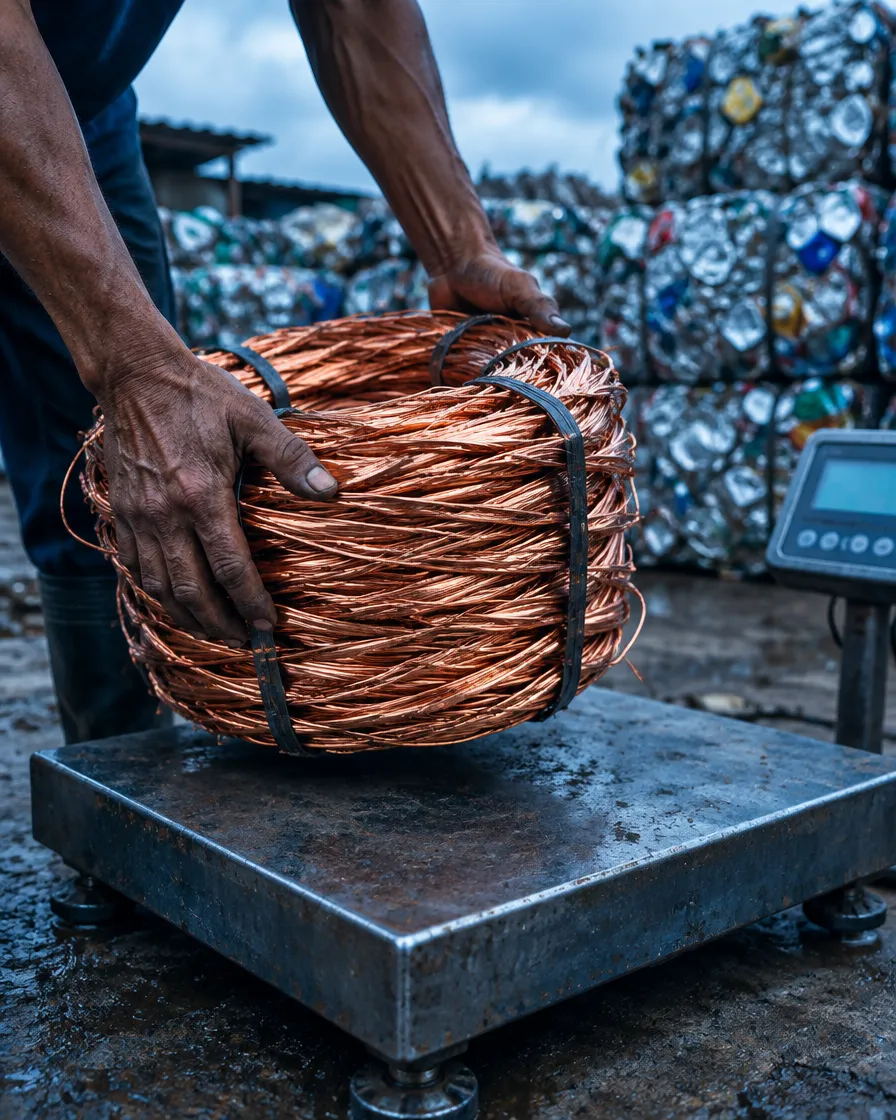
Materials sit far apart.The same study's price table had copper at many times the price per kilo of steel bars, with brass between copper and aluminum. One number for kalakal hides all of that.
Your buyer sets your ceiling.What you can pay depends on what your trading company pays you. When that changes, your list has to change with it, and a list on someone else's website can't follow it.
Your costs are yours.Rent, wages, the truck and what you lose to sorting all come out of the gap between what you pay and what you sell for. Nobody else can set that gap for you.
Source: Romallosa, Penetrante and Ravena, Junkshops as Recycling Chain Actors in the Recovery of Waste Resources from a Highly Urbanized City in the Philippines, Applied Environmental Research 46(3) (September 5, 2024), checked October 7, 2026. A summary of a study, not advice. Selling scrap? Ask two or three yards near you for their price per kilo on the day.
Six things that decide your price per kilo.
Work through these for each material on your list. The ScrapTrack column shows where each one lives once the list is set up.
| Factor | What it means | In ScrapTrack |
|---|---|---|
| Your buyer's price | What your trading company or next buyer pays you per kilo, for that material and grade | Your starting point when you set or change a material's price per kilo |
| Grade | Ask your buyer how it grades each material, then pay your sellers by the same grades | List each grade as its own material, with its own price per kilo |
| Tare and dirt | Sacks, containers, water and dirt add weight you won't be paid for | Gross and tare go on every ticket, so you only pay on the net weight |
| Hauling | The truck, fuel and labor it takes to deliver to your buyer | Not tracked by ScrapTrack; take it off before you set the price |
| Your margin | The gap between what you pay the supplier and what your buyer pays you | Totals for bought and paid by day, week or any date, to check against your sales |
| Stock on hand | Material you bought at an old price and haven't sold yet | Stock by material, updated with every weigh-in |
Build your price list once, then change it one material at a time.
The list lives in ScrapTrack, so the counter always weighs in at the price you set last.
- 01 · Materials
List what you buy, in your own words
Add each material under the name your staff and suki use, like tansong pula, bakal or karton. Split a material into grades when the grades pay differently.
- 02 · Prices
Set a price per kilo for each one
Start from what your buyer pays for that grade, take off hauling and your margin, and enter the result as that material's price per kilo.
- 03 · Weigh-ins
Let the counter do the math
Staff pick the supplier and material and type gross and tare from the scale. The net weight and amount fill in from your price per kilo.
- 04 · Updates
Change one price when the market moves
When your buyer changes what it pays for a material, set that material's new price per kilo. The rest of the list stays as it was.
More on running the buying counter.
Questions about junkshop prices.
Ask us anything else on Viber or WhatsApp, or write to sales@orvyn-solutions.com.
See your own price list in ScrapTrack.
Send us the materials you buy and we'll load them into the demo with your names. You get a quote after.